
News Resources
Hdata | Customer Story: Proactive Monitoring to Reduce Risk
How NextEra Energy Transmission and Washington Gas Turned Regulatory Monitoring from Patchwork to an Effective System
Regulatory risk rarely announces itself clearly, or conveniently. More often, it shows up quietly: a filing buried in a docket, a white paper posted under the radar, a policy shift hinted at in a footnote rather than a headline. By the time it becomes obvious, the window to shape the outcome may already be closing.
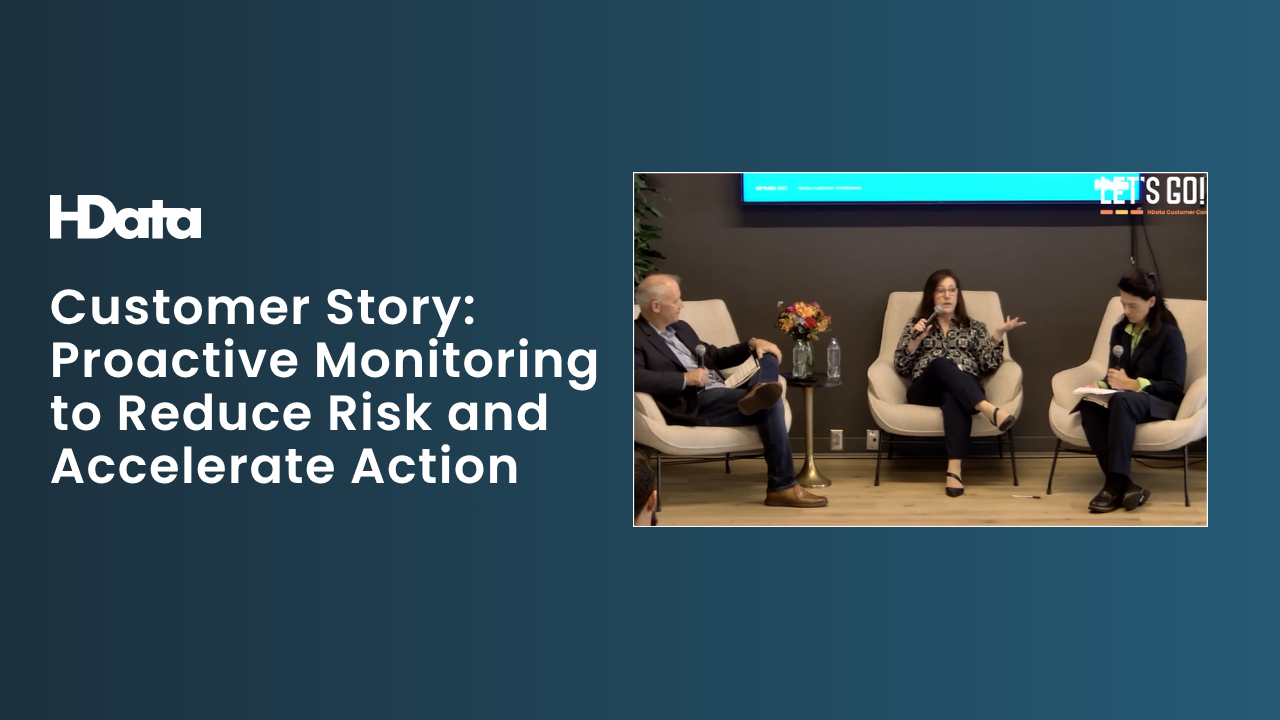
At LET’S GO! 2025, HData’s annual customer conference, regulatory leaders from NextEra Energy Transmission and Washington Gas joined a panel on how proactive regulatory monitoring has changed the way their teams work. Amy Lowe, Director of Regulatory Affairs at NextEra Energy Transmission, and Laura Storino, Director of Federal Regulatory Strategy at Washington Gas, shared how moving from reactive to proactive monitoring has helped them act faster, reduce risk, and build more resilient regulatory teams.
Why Reactive Monitoring Isn’t Enough Anymore
For years, regulatory teams stayed informed the same way: by piecing it together through trade publications, manual docket searches, email lists from agencies or pipelines, and tips passed along by word of mouth.
That patchwork approach worked, until it didn’t.
“As a FERC nerd, I might be in the FERC library every day,” Storino said, “or I might see something in a trade magazine. The process was really disparate.”
Disparate processes introduce delay, and delay introduces risk. As filing volumes climb and issues move faster across state and federal dockets, a monitoring approach built on habit and luck leaves regulatory teams finding out about developments after the fact, rather than as they happen.
Catching What Others Miss
For Lowe, proactive monitoring became essential as her team tracked state-level efforts to reintroduce rights of first refusal (ROFR) that could disadvantage competitive transmission developers like NextEra.
Shortly after her team set up HData alerts around the issue, they caught a white paper that had been filed quietly, one that supported arguments counter…
This is a brief preview of the original article. Visit the source for the complete story, additional context and further details.